
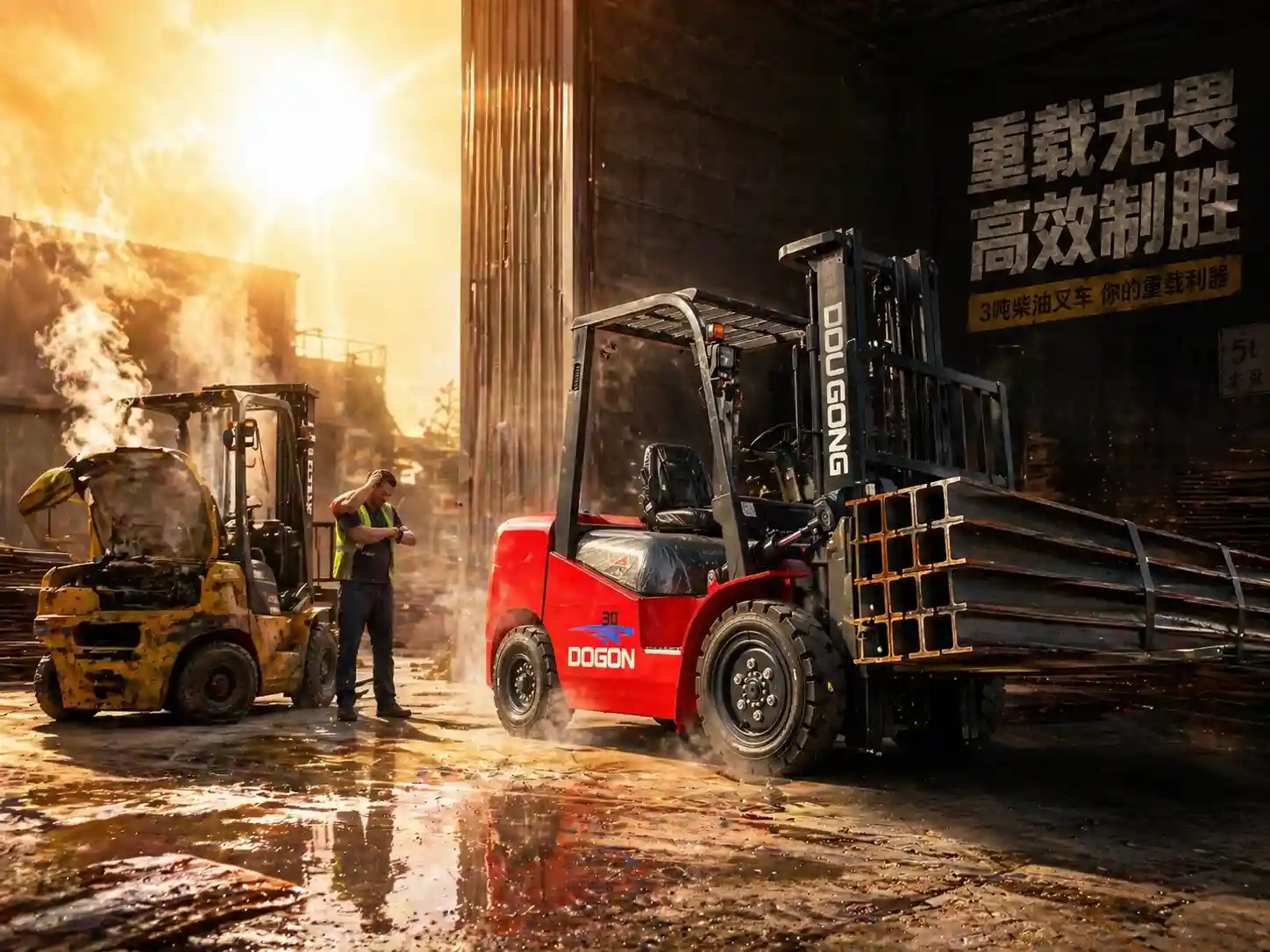
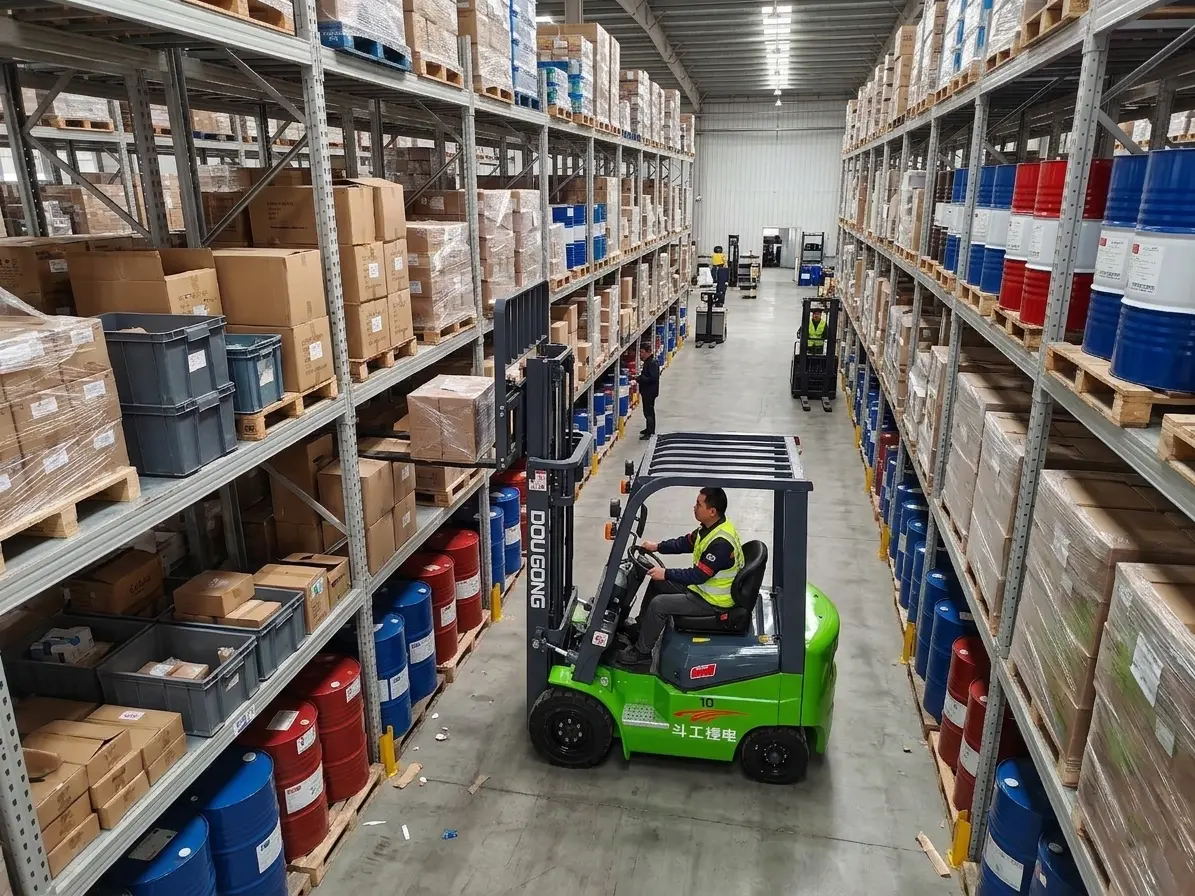
In the unforgiving environments of wood processing plants, steel fabrication yards, and heavy-manufacturing logistics centers, material handling equipment is not a luxury—it is the central artery of production. When an inferior forklift experiences thermal shutdown under the August sun, or its engine stalls on an outdoor ramp under a maximum load, the enterprise does not just lose time. It bleeds revenue. Dropped throughput, idle labor, and delayed shipping schedules create a cascading effect of direct economic losses.
Equipment procurement executives understand that the initial purchase price of a forklift is only a fraction of the equation. True value is derived from minimizing Total Cost of Ownership (TCO) while guaranteeing absolute power response, operational safety, and continuous uptime in harsh, semi-outdoor, and outdoor environments. In my fifteen years of internal combustion (IC) forklift research, development, and market strategy, I have seen operations paralyzed by equipment that simply could not withstand the rigors of heavy industry. To secure operational certainty, a 3.5-ton heavy-duty diesel forklift must be engineered from the ground up to conquer three absolute imperatives: relentless powertrain torque, uncompromising hydraulic precision, and thermal resilience.
The Battle of the "Heart" – Powertrain Synergy and Torque Delivery
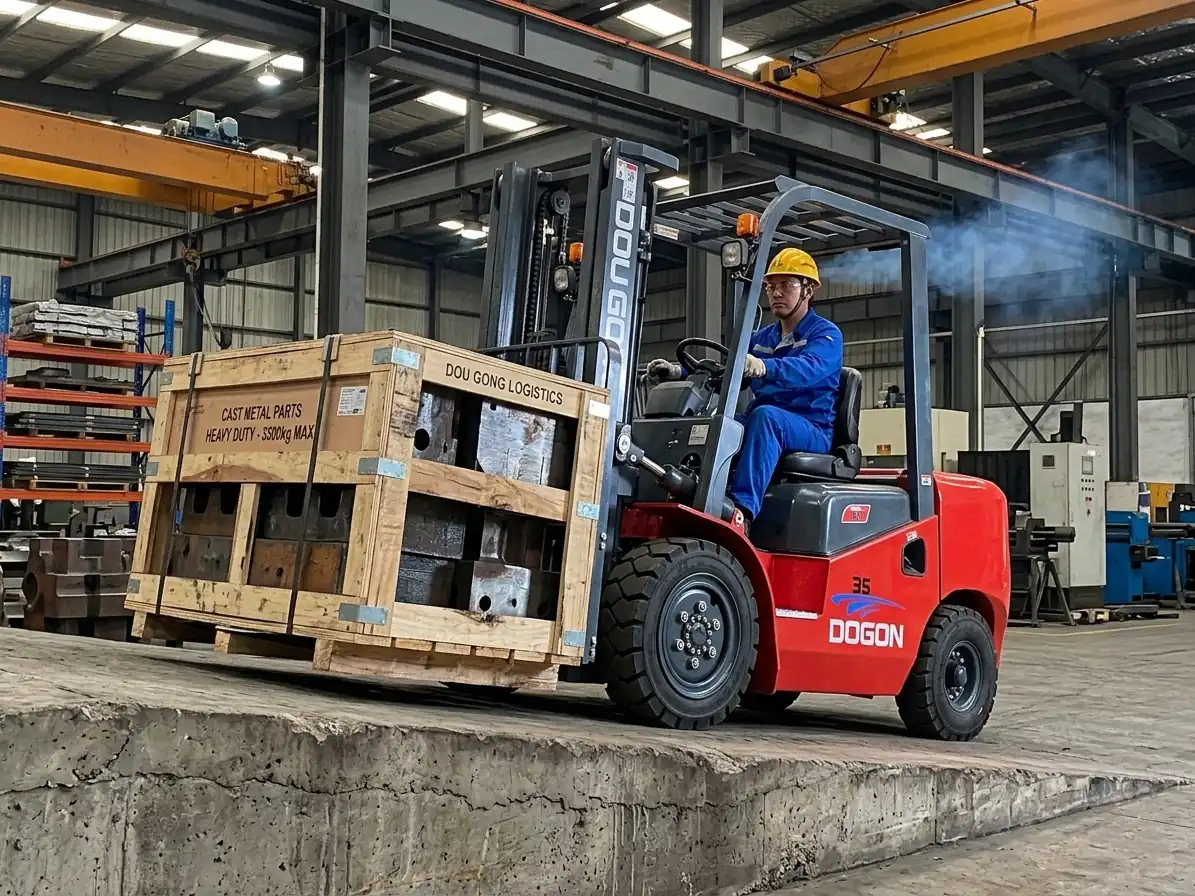
The internal combustion engine and its corresponding transmission constitute the beating heart of any heavy-duty forklift. In high-intensity logistics, equipment is subjected to a punishing cycle of frequent starting, stopping, reversing, and lifting under maximum dynamic stress. A weak powertrain translates directly to sluggish material flow and premature transmission failure.
To meet these demands, our engineering priority centers on integrating a high-torque, high-pressure common-rail diesel engine. Unlike legacy mechanical injection systems, the high-pressure common-rail system utilizes electronic control units (ECUs) to deliver precise fuel atomization at extraordinary pressures, regardless of engine speed. This technological leap provides a massive reserve of low-end torque. From a practical standpoint, this means the forklift delivers explosive, immediate power the moment the operator touches the pedal, completely eliminating the dangerous “power lag” common in inferior models.
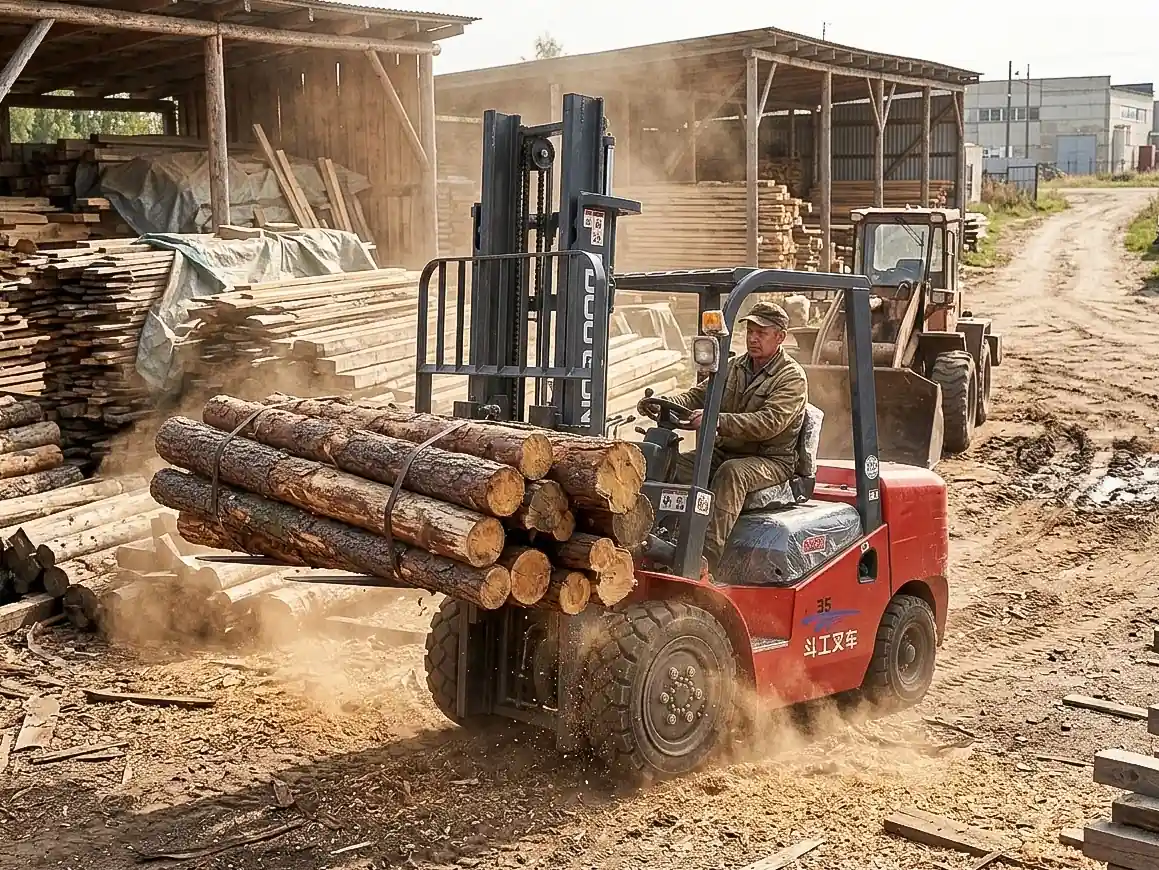
This low-speed torque is the critical metric for heavy-load gradeability. When moving 3.5 tons of rough-cut timber or dense metal castings up an outdoor loading ramp or across uneven yard terrain, power failure is not an option. By perfectly matching the torque curve of the common-rail engine with a heavy-duty hydrodynamic transmission, we ensure that the full-load gradeability strictly exceeds the 20% threshold. The torque converter is specifically engineered to handle the thermal loads of constant directional shifts (forward-to-reverse inching), ensuring that power transmission remains seamless, reducing drive-axle shock, and drastically lowering the failure rate of the powertrain over a typical five-year depreciation cycle.
Structural Mechanics and Hydraulic Safety
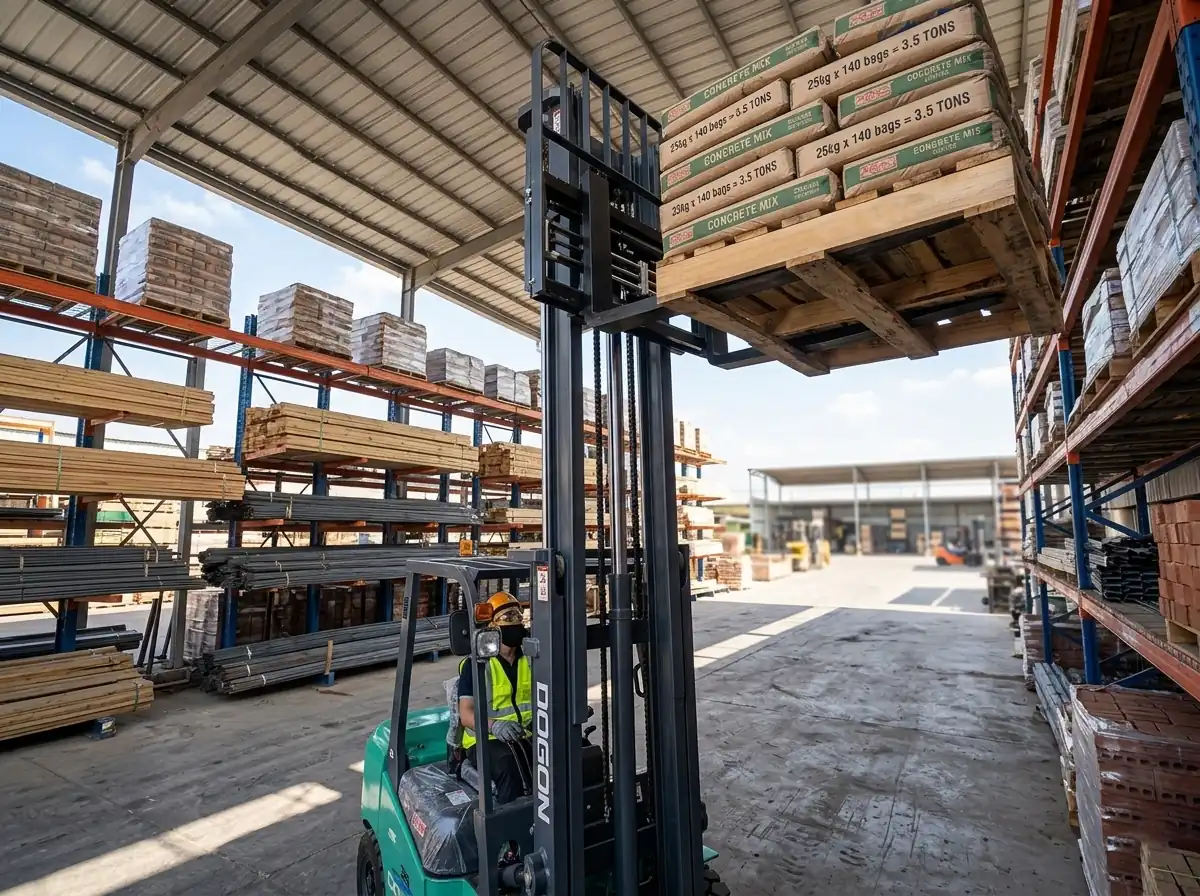
Lifting and maneuvering a 3.5-ton load is relatively straightforward; stacking that same load at maximum mast height with absolute stability is the true test of structural mechanics and hydraulic engineering. In outdoor operations where wind loads and uneven ground conditions amplify dynamic stress, structural deflection or hydraulic drift can lead to catastrophic load failure.
To address this, the mast infrastructure is built using reinforced, nested steel profiles with heavy-duty load rollers, designed to mitigate torsional twist and lateral deflection. However, the true differentiator lies in the implementation of a load-sensing hydraulic system.
Traditional fixed-displacement hydraulic pumps constantly push hydraulic fluid at maximum flow, diverting excess oil over a relief valve. This antiquated method causes immense parasitic horsepower loss and generates severe heat. In contrast, our load-sensing system dynamically adjusts hydraulic flow and pressure to match the exact demands of the steering and lifting circuits. This delivers millimeter-level accuracy to the operator. Whether inching a heavy die into a stamping press or precisely stacking a 3.5-ton pallet of building materials at high levels, the hydraulic response is immediate, proportional, and perfectly smooth, completely eliminating the shuddering and shaking that plagues lower-tier equipment.
Equally critical to hydraulic safety is our advanced heat dissipation design. High-intensity continuous operations, especially under the summer sun in heavy manufacturing yards, generate extreme internal temperatures. When hydraulic fluid overheats, its viscosity breaks down. More destructively, superheated hydraulic oil bakes the internal rubber and polyurethane seals within the cylinders and valves. This thermal aging makes the seals brittle, which is the root cause of sudden hydraulic pressure loss, internal bypassing, and catastrophic oil leaks in the field.
To completely engineer out this failure mode, the equipment utilizes large-capacity, heavy-duty pipe-type radiators combined with optimized aerodynamic air ducts. Pipe-type radiators are far more resilient to clogging from airborne debris (like sawdust or industrial dust) than standard automotive-style fin radiators. The optimized air ducts utilize a high-efficiency suction fan to aggressively pull ambient air through the cooling matrix and channel the superheated air away from both the vital components and the operator compartment. By strictly controlling the operating temperature of the hydraulic fluid, we preserve seal integrity, eliminate heat-induced oil leaks, and ensure the hydraulic system performs safely through multi-shift continuous operations.
Maintenance Economics
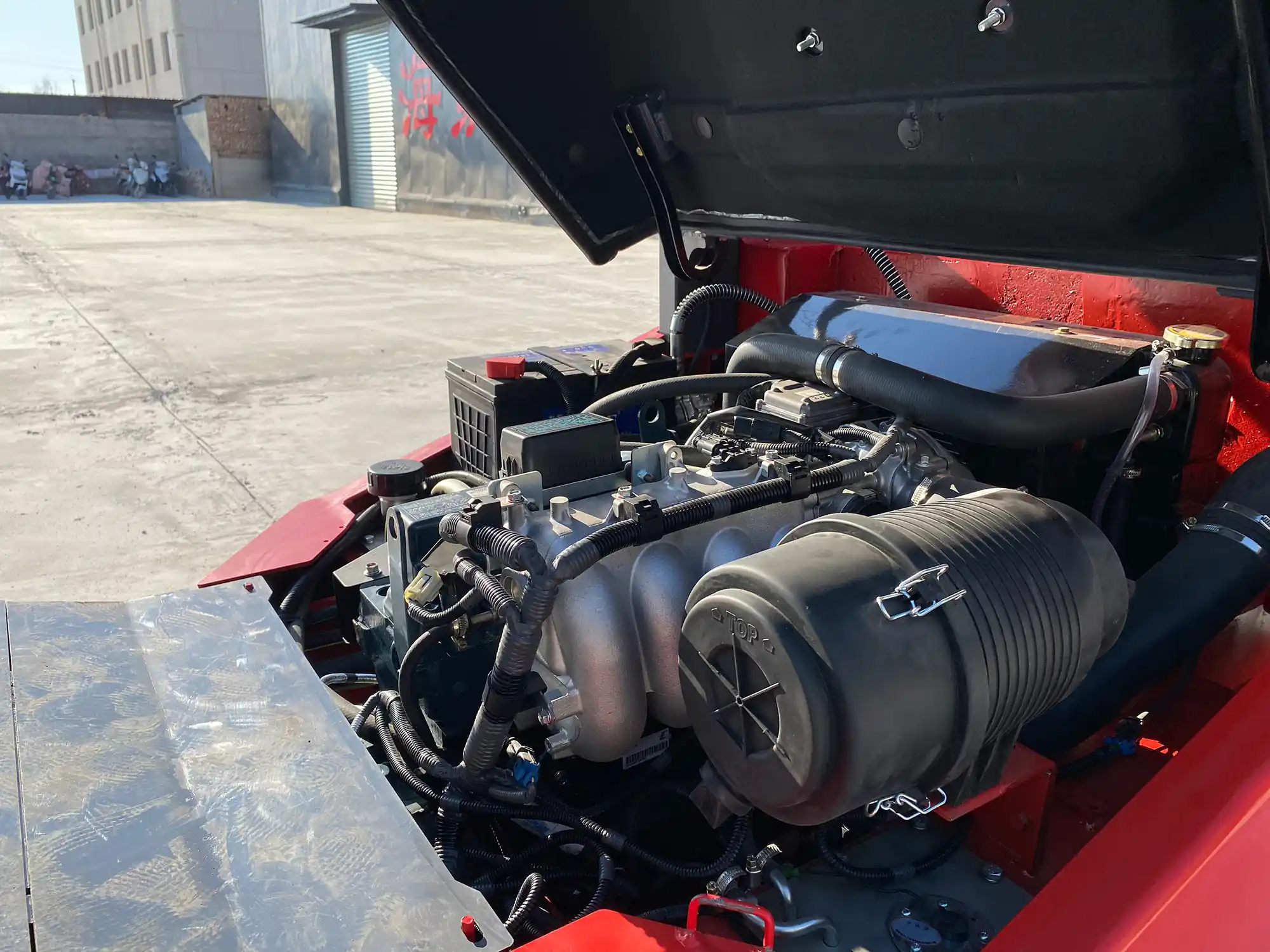
For procurement executives managing large fleets, TCO is ultimately won or lost in the maintenance bay. Every hour a forklift spends offline for basic servicing is an hour of lost productivity. A high-performance forklift must therefore be paired with an exceptionally pragmatic maintenance architecture. We approach maintenance economics with the same rigorous engineering standards as we do the powertrain.
First, we extend the standard preventative maintenance cycle up to 500 hours. This is achieved through the integration of high-capacity filtration systems, superior heat management (which drastically extends the life of engine and hydraulic oils), and the use of the high-pressure common-rail engine, which burns cleaner and produces less soot to contaminate the crankcase oil.
Second, the physical layout of the machine is designed for rapid intervention. Equipment that takes a technician two hours simply to access the oil filter is an operational liability. Our design features an ultra-wide opening engine hood and tool-less removable floorboards, exposing the entire powertrain and hydraulic pump assembly in seconds. All daily check points—including the engine oil dipstick, coolant reservoir, and hydraulic sight-glass—are clustered together. Furthermore, the primary wear components (the fuel-water separator, engine oil filter, and dual-element air filter) are positioned on a centralized, outward-facing layout.
This ergonomic approach to component placement means that a standard 500-hour service interval can be completed by a single technician in a fraction of the traditional time. By reducing labor hours per service, extending the intervals between necessary maintenance, and eliminating the chronic repairs associated with overheated hydraulic seals and burned-out transmissions, this equipment significantly drives down annual fleet maintenance costs.
Conclusion
In the demanding ecosystem of high-intensity logistics, heavy manufacturing, and timber processing, there is no room for fragile equipment. The operations demand brute force, tempered by microscopic precision and unwavering reliability.
The 3.5-ton internal combustion diesel forklift stands as the fundamental “ballast stone” for these heavy-duty logistics operations. By integrating a high-torque common-rail powertrain for relentless low-speed gradeability, implementing load-sensing hydraulics for millimeter-accurate high-level stacking, and protecting the entire system with superior pipe-type thermal management, this equipment directly answers the core concerns of modern procurement. It neutralizes the threat of heat-induced downtime, secures maximum material throughput in extreme outdoor environments, and drives down the Total Cost of Ownership through intelligent maintenance economics. For enterprises where logistics efficiency directly dictates profitability, this is not just a procurement choice—it is a strategic investment in industrial survival and operational certainty.
